


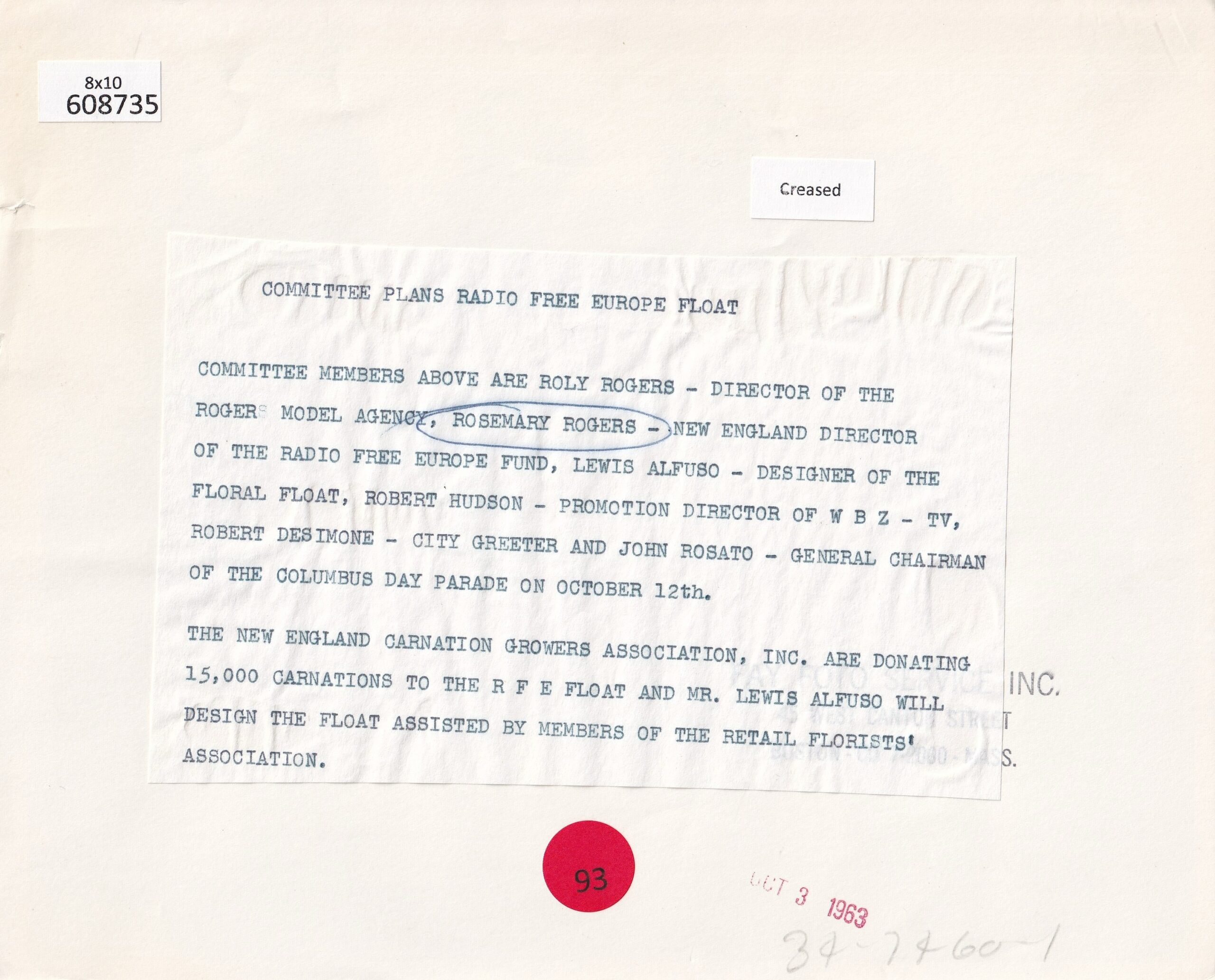
This photograph documents a committee meeting in Boston, Massachusetts (1963), convened to plan a Radio Free Europe (RFE) Fund float for the Columbus Day Parade. It illustrates the outward face of a nationwide campaign: civic pageantry in support of broadcasting freedom behind the Iron Curtain. What looks like ordinary volunteerism was part of a far larger informational strategy that mobilized American public sentiment for an effort sustained largely through covert funding.
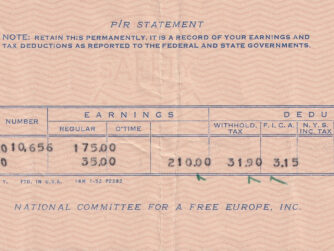
To understand the deeper context of this photograph, this post draws on the museum’s earlier detailed history of Radio Free Europe fundraising during the Cold War, as well as the administrative story told by the payroll statement of the National Committee for a Free Europe.
Key Takeaways
- The Radio Free Europe Fund acted as a public, civic campaign supporting RFE’s mission.
- Public fundraising and pageantry accounted for only a small portion of actual support.
- Most funding came from covert U.S. government appropriations routed through the CIA.
- Early secrecy was intended to protect the mission and its listeners; experts later argued it should have been ended once exposed.
- Despite the funding controversy, RFE helped millions access uncensored news behind the Iron Curtain.
Crusade for Freedom and the Fund’s Origins
The roots of the Radio Free Europe Fund trace back to the Crusade for Freedom, a nationwide campaign launched in the 1950’s. While publicly presented as a volunteer effort to support broadcasting to Eastern Europe, its organizing principles were deeply tied to the strategic imperatives of early Cold War information policy. As the museum’s fundraising history notes, initial promotional materials emphasized RFE’s role in helping captive peoples resist oppression:
RADIO FREE EUROPE
80,000,000
Captive people are depending on you […]
• RFE combats Communism by breaking through the Iron Curtain with straight, unvarnished news and information the people need to resist Soviet propaganda.
• RFE effectively breaks through Communist jamming attempts and remains the “most popular” and “most influential” Western station broadcasting to the captive people.RADIO FREE EUROPE FUND
(Crusade for Freedom)1
These early materials framed RFE as a private initiative that depended on citizen support. But as the museum notes, this public facade masked the fact that the station’s operational budget was overwhelmingly financed behind the scenes by the U.S. government through secret congressional appropriations managed by the CIA. RFE’s administrative existence was, in essence, dual: a public volunteer front and a covertly financed broadcasting organization operating across borders. 2
Public Campaigns, Media, and National Participation
Throughout the 1950s and early 1960s, public campaigns drove visible support for RFE. Americans were invited to sign “Freedom Scrolls,” attend rallies, donate to workplace giving drives, and watch broadcasts advocating freedom and truth. These activities involved major media outlets and local committees—exactly like the one pictured in Boston. The museum’s archive includes promotional government memoranda showing RFE was included in federal workplace giving campaigns alongside charities such as the American Cancer Society and Care. 3
Images from Fundraising Campaigns
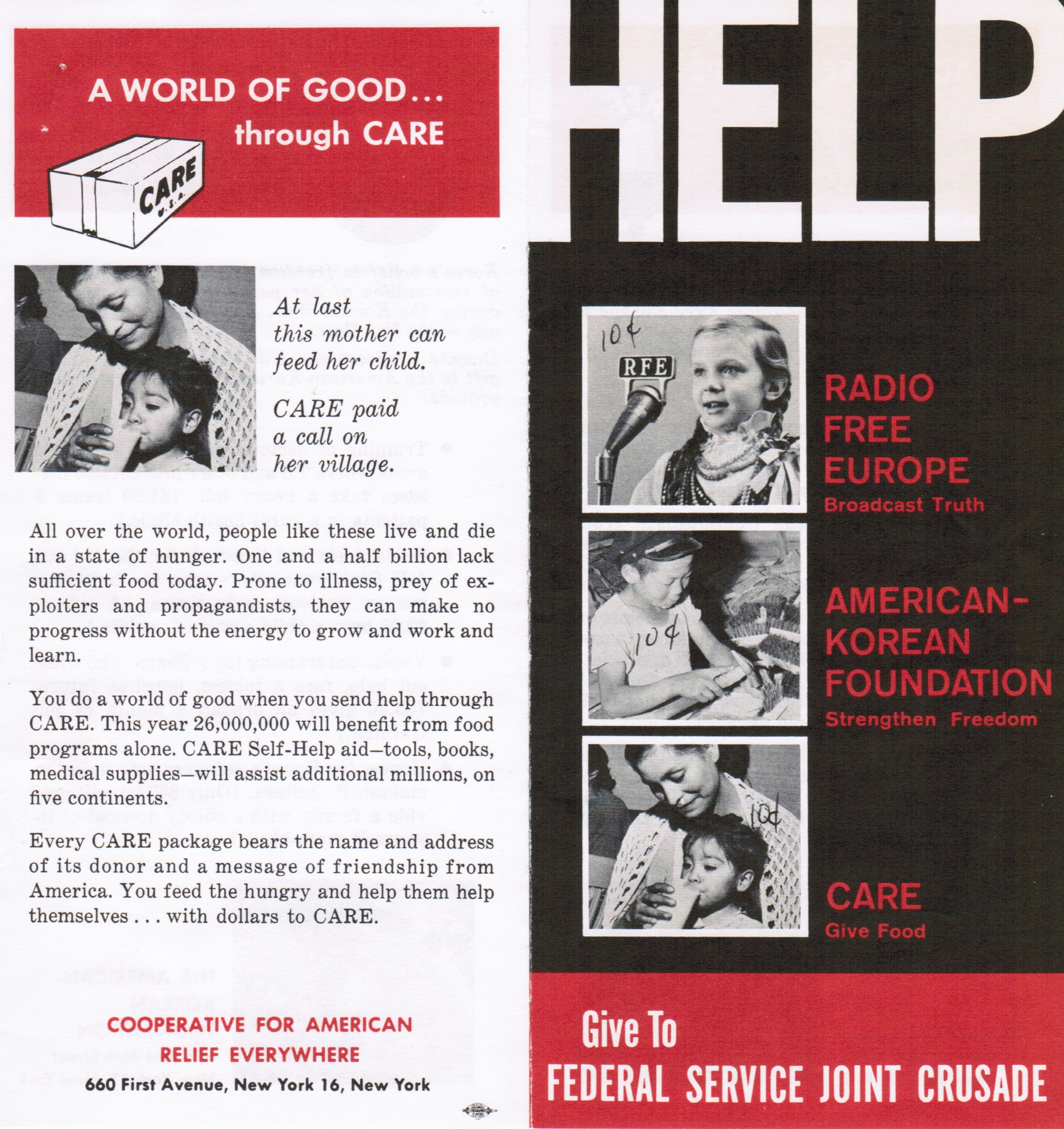
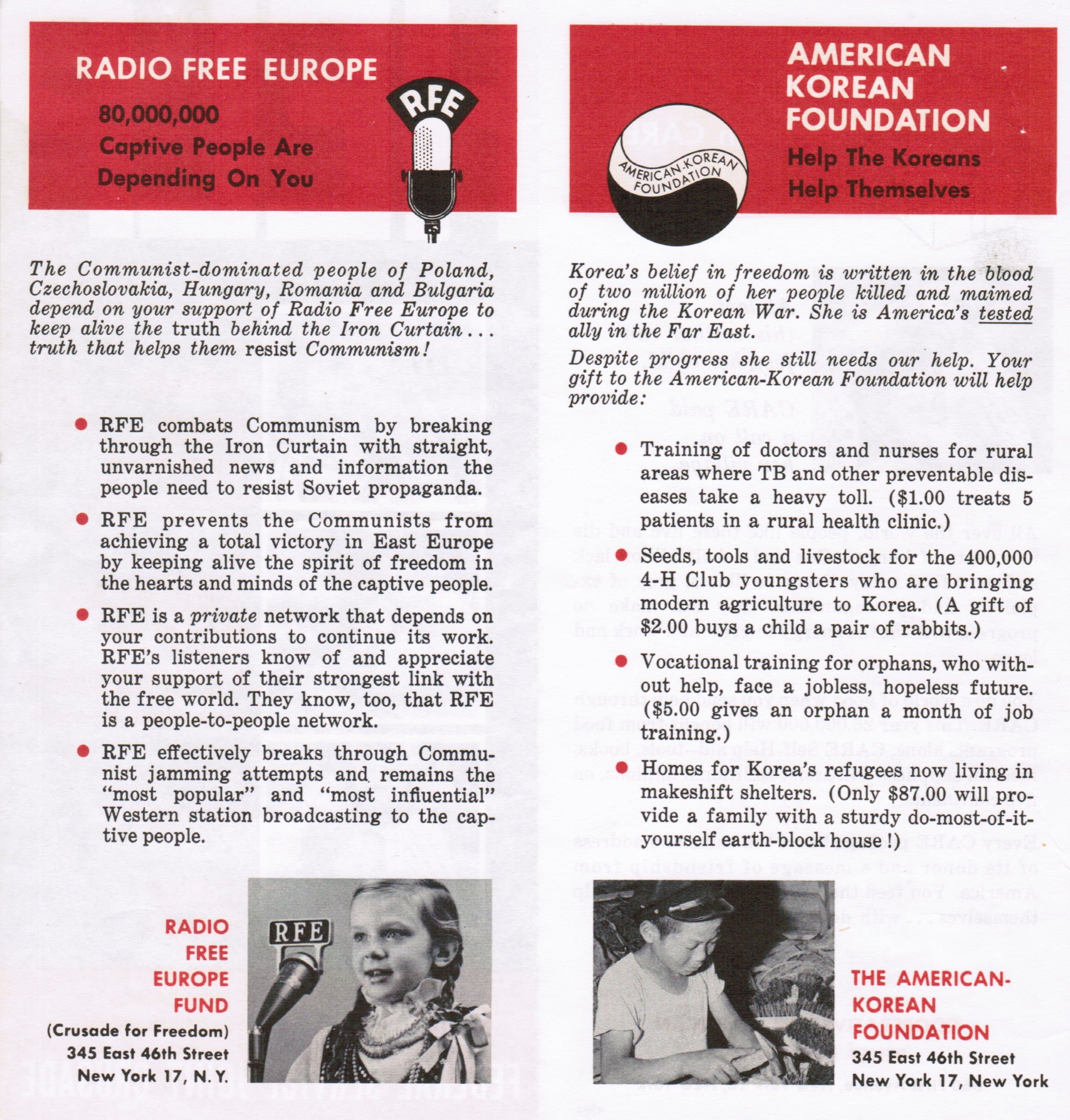
These campaign brochures show typical messaging from 1963, appealing to Americans’ sense of solidarity with people behind the Iron Curtain and urging them to support Radio Free Europe as a way of resisting communist propaganda and oppression. 4
Quotes from Key Figures
“The dynamic early Cold War combination of Radio Free Europe and the Crusade for Freedom was a powerful change management tool of the U.S. government… The Crusade for Freedom could be termed a ‘fraud’ on Americans, but it was, in my opinion, a benign fraud: it probably gave most Americans what they wanted anyway… a feeling of belonging and contributing to a justified cause—a Cold War consensus.”
5
“…from 1951 through 1976, [Crusade for Freedom/Radio Free Europe Fund] receipts totaled about $50 million and campaign costs about $20 million… only a tiny fraction of the total sum required to operate Free Europe… The most important goal… was to provide cover so it would appear the funding was derived from the general public and not from any governmental source.”
6
Secrecy: Necessary and Then Outlived
In the early years of the Cold War, keeping the true source of funding off the public record helped protect listeners, many of whom faced arrest, imprisonment, or worse if caught tuning to western broadcasts. It also provided diplomatic cover when communist governments protested RFE broadcasts, since U.S. officials could claim no direct governmental control over the station. 7
However, as congressional investigations and press coverage exposed the CIA’s role in the late 1960s and early 1970s, many experts argued that continuing to pretend RFE was privately funded became unnecessary and a risk to credibility. Once the secret was publicly known, authorities concluded that transparent, open appropriations from Congress were a more appropriate arrangement.
Linking to Everyday Bureaucracy
This Boston fundraising photograph should be read alongside the museum’s recent feature on the payroll statement issued to employees of the National Committee for a Free Europe. That humble administrative artifact shows the human side of this work: journalists, technicians, and staff paid through a private-appearing organization whose funds were ultimately sourced from hidden government appropriations. 8
Impact Behind the Iron Curtain
Despite the complex funding story, RFE broadcasts provided uncensored news, exposed communist propaganda, and gave hope to millions in Eastern Europe who had no access to open media. In many cases, listeners risked imprisonment for tuning in. The station’s role in the broader struggle for human rights and informational freedom is a powerful testament to the importance of truthful reporting in the face of repression. 9
Cold War Radio Museum Collection.
NOTES:
- Quoted from original Radio Free Europe Fund promotional copy, Cold War Radio Museum archives.
- See “Radio Free Europe Fundraising During the Cold War,” Cold War Radio Museum.
- Ibid.
- Ibid.
- Richard H. Cummings, quoted in “Radio Free Europe Fundraising During the Cold War,” Cold War Radio Museum.
- Sig Mickelson, America’s Other Voice: The Story of Radio Free Europe and Radio Liberty, quoted in “Radio Free Europe Fundraising During the Cold War,” Cold War Radio Museum.
- Ibid.
- Cold War Radio Museum (2025).
- See related Radio Free Europe anniversaries and listener testimony in the museum archives.